Brand Bidding: Cannibalisation or Incremental Growth?
- Daniel Lupu
- Mar 21
- 3 min read

I recently posted about this on LinkedIn, and it caught a lot of people off guard: your Google App Campaigns will target your brand keywords by default, unless you add negative suppression lists.
What makes this especially frustrating is that Google doesn't let you add those suppression lists at the campaign level. You have to message your Google rep to get it done, meaning most advertisers are unknowingly spending paid budget on users who would have installed organically anyway.
But let's come back to the broader topic. Everyone tells you brand bidding cannibalises organic and they're not wrong, but stopping there without testing means you're missing half the picture and potentially leaving a significant volume of installs on the table.
The common assumption: Brand bidding cannibalises your organic downloads
The concern is legitimate. If a user is already searching for your brand name, they're likely to find and click your organic listing anyway. Running a paid brand campaign in that scenario just means you're paying for a click you'd have received for free which is a textbook case of cannibalisation.
But cannibalisation is only part of the story. The more interesting question is whether brand bidding can drive incremental installs, downloads that wouldn't have happened otherwise.
The test: Removing brand suppression lists
I ran a brand bidding test across multiple markets within a set of Google App Campaigns. The setup was straightforward: I removed brand suppression lists (which had previously been preventing ads from showing on branded queries) and tracked what happened to both paid and organic installs over the following weeks.
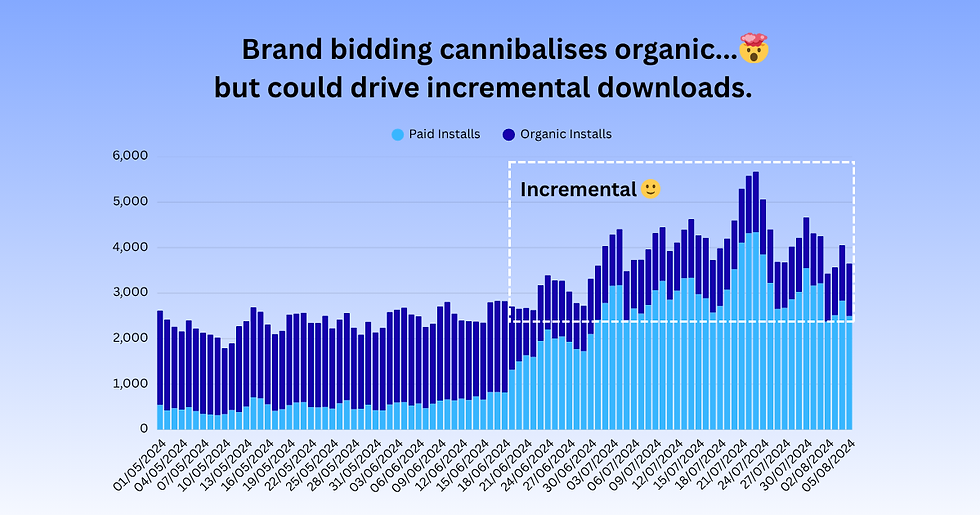
The chart tells a clear story in one of the markets. Yes, there was a dip in organic installs once brand ads started running , but total install volume increased significantly. The combined paid + organic figure was meaningfully higher than organic alone had been before the test. That's incrementality working as it should.
Why some markets showed incrementality, while others didn't
Not every market told the same story. In several other regions I tested, removing suppression lists produced no incremental growth at all. The paid installs simply replaced the organic ones with no net gain and I believe the key variable might be brand awareness.
High Awareness Markets
In markets where the brand is well-established, competitors are almost certainly already bidding on your brand terms. This means your organic listing is already under competitive pressure. Bidding on your own brand in these markets lets you dominate the search results, push competitors further down, and capture demand that might otherwise leak, hence the incremental upside.
Low Awareness Markets
In markets where brand recognition is lower, or where competitive bidding on your terms is minimal, the dynamic flips. The users searching for your brand are typically high-intent, likely-to-convert anyway. Running paid ads here mostly just shifts the attribution from organic to paid and you're basically paying for installs you were getting for free.
What would I recommend?
Don't make brand bidding a blanket decision across all markets. Treat it as a market-by-market hypothesis. In each region, ask: how strong is our brand? Are competitors bidding on us? What does total install volume look like with and without brand suppression? Run a structured test, measure total installs (not just paid), and let the data tell you whether the incrementality justifies the CPIs.

Comments